Jupyter notebooks are fantastic for dirty prototyping and exploratory analysis, but pushing a raw linear script into a production microservice cluster is an architectural disaster waiting to happen. Enterprise systems demand object-oriented structures, rigorous error handling, and robust concurrent orchestration layers.
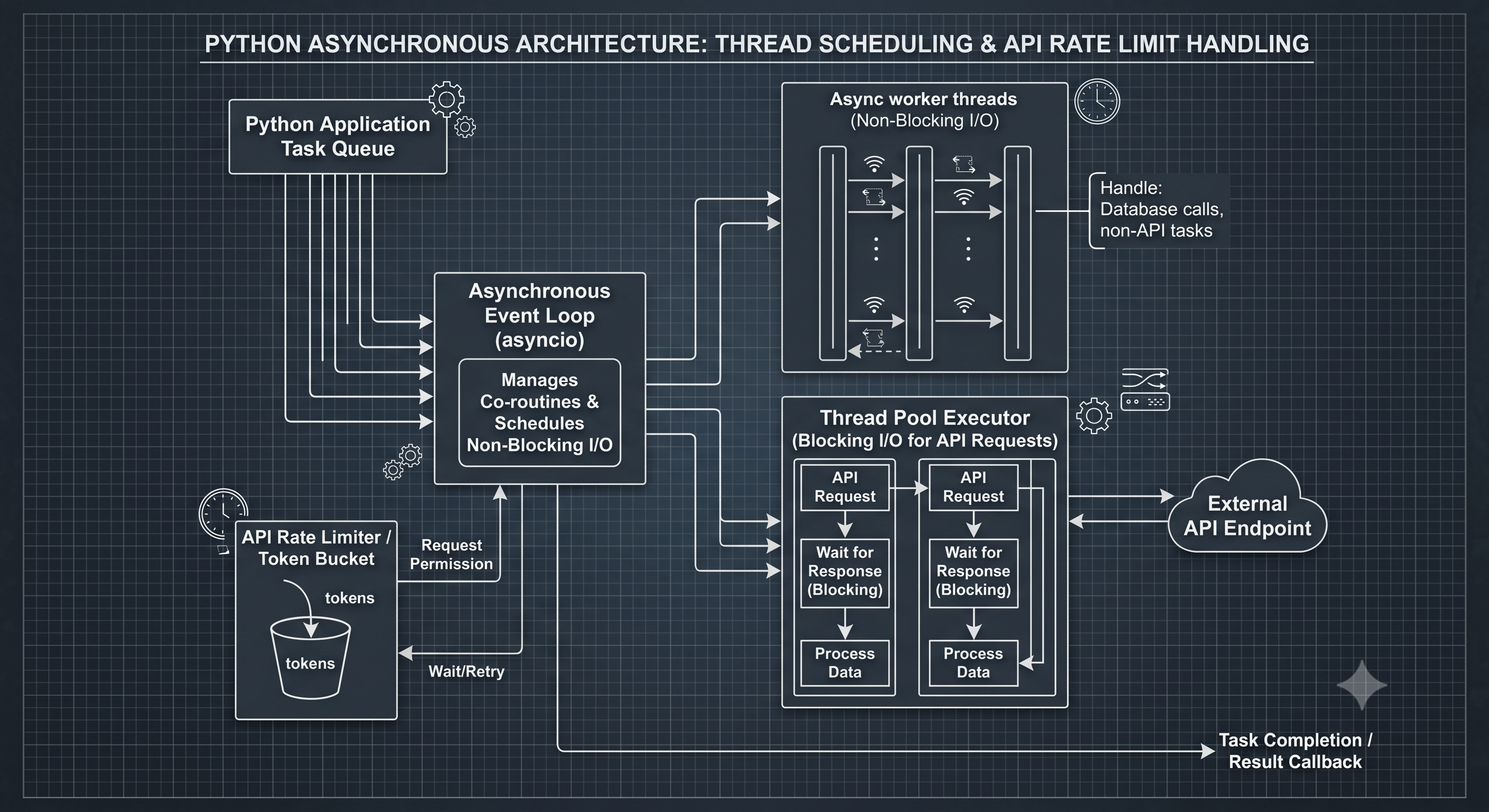
When managing external LLM API endpoints, your system will inevitably encounter rate-limiting errors (HTTP 429). If your pipeline executes queries synchronously, a single blocked call stalls your entire data queue. Implementing Python’s asyncio allows your workers to yield execution threads during network I/O cycles, maximizing processor utility.
Furthermore, typing rules must be explicitly enforced. Utilizing Pydantic models to validate structural JSON payloads incoming from unstructured LLM outputs ensures runtime reliability. By building custom decorators to automate backoff and retry handling, your backend architecture remains resilient during traffic spikes.